
Learn how AI-powered hyper-personalization is transforming wealth management in 2026, from real-time portfolio optimization to scalable client engagement.
AI Hyper-Personalization in Wealth Management: Guide for Financial Advisors 2026
AI in wealth management is now a must-have for US advisory firms that want to stay competitive. IDC says that generative AI will make the wealth management market worth $300 billion by 2026. This guide gives financial advisors who want to grow useful ways to use AI and covers the benefits of AI in investment management.
The move toward hyper-personalization in finance is changing what clients expect in a big way. More than 60% of wealthy clients now want live dashboards and instant information. Advisors who are good at using AI-powered financial planning will take a bigger share of the market in the future.
What Does AI Wealth Management Personalization Mean?
AI wealth management personalization uses machine learning to provide tailored wealth advisory services to a large number of people. AI systems look at spending patterns, tax brackets, and risk appetite all the time, unlike traditional models. This lets you get bespoke portfolio recommendations that human analysts take weeks to figure out.
How AI Personalizes Financial Advice for Each Client?
The heart of personalized wealth management is always looking at and changing data. Modern AI financial advisor systems look for patterns in millions of data points. These patterns help create personalized investment strategies that are tailored to each client's needs and goals.
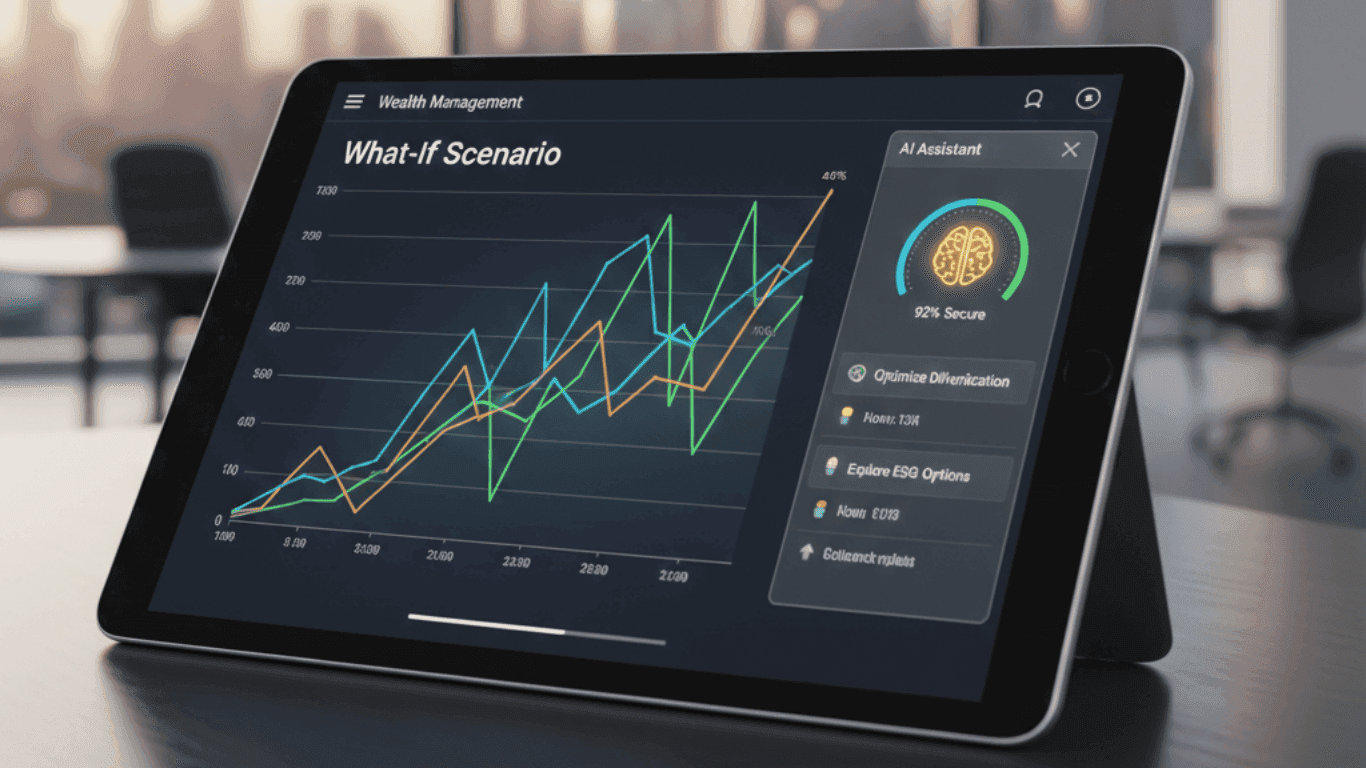
AI-powered systems can now do more than just rebalance; they can also predict volatility before it gets worse. They look at financial reports right away and flag investment opportunities in real time. With this feature, advisors can offer all of their clients institutional-grade AI portfolio optimization.
Behavioral analytics wealth management looks at what clients actually do, not just what they say they want. The technology records how clients react to changes in the market and their financial choices. This makes dynamic risk profiling AI that changes all the time based on what people actually do.
Why Hyper-Personalization in Finance Will Be Important in 2026?
Across all industries, client expectations have changed a lot toward personalized digital experiences. Industry research shows that 73% of wealth managers think AI will cause disruption. To meet these expectations, your whole practice needs custom financial planning AI capabilities.
Wealth management automation makes sense for businesses of all sizes. Accenture thinks that early adopters will see their revenue grow by 600 basis points. Companies that use AI well can see productivity gains of 22% to 30%.
| Personalization Element | Traditional Advisory | AI-Enhanced Advisory | Client Value |
|---|---|---|---|
| Risk Assessment | Annual questionnaire | Continuous behavioral analysis | More accurate profiles |
| Portfolio Adjustments | Quarterly review | Real-time automatic rebalancing | Faster market response |
| Tax Planning | Year-end optimization only | Continuous tax-loss harvesting | Higher after-tax returns |
| Communication Style | Scheduled meeting cadence | Proactive personalized alerts | Greater engagement |
| Goal Monitoring | Manual progress reporting | Dynamic projection updates | Clear outcome visibility |
Key AI Technologies That Make Personalized Wealth Management Possible
Advisors can confidently evaluate platforms and tell clients what they can do if they know the core technologies. Today, each part of the AI in wealth management technology ecosystem has its own job to do.
Machine Learning Portfolio Management and Pattern Recognition
Machine learning portfolio management is great at finding patterns in huge amounts of data on its own. These algorithms keep getting better at making predictions as they get new data about the market and customers. The practical uses include choosing investments, managing risk, and improving client service.
AI-powered systems can process millions of market data points faster than traditional research teams. This lets AI-driven investment recommendations be truly proactive instead of just changing portfolios when something goes wrong. For efficiency, ML models check thousands of securities against many criteria at the same time.
Natural Language Processing Financial Services Applications
Natural language processing financial services tools handle routine questions and requests for information quickly and easily. Wealth technology research says that NLP improves how clients interact with chatbots and assistants. This lets human advisors focus on building relationships and having complicated strategic conversations.
Modern NLP systems look through emails and meeting notes to find feelings and worries. They point out risks and chances that advisors should talk about in future meetings. AI client engagement tools that use NLP make it easier for clients to respond while also making it easier for admins to do their jobs.
| AI Technology | Main Use | Benefits for Advisors | How Hard It Is to Use |
|---|---|---|---|
| Machine Learning | Recognizing patterns in data | Finding opportunities automatically | Medium |
| Natural Language Processing | Analyzing and responding to communication | Lessening administrative work | Low |
| Predictive Analytics | Forecasting and scenario modeling | Proactive planning capabilities | Medium |
| Generative AI | Making and simulating content | Making reports automatically | Low |
| Reinforcement Learning | Dynamic strategy optimization | Continuously improving recommendations | High |
Benefits of AI in Investment Management for US Advisors
AI-powered financial planning has benefits for both operational efficiency and client outcomes. Advisors can make strong cases for investing in technology internally if they know the specific benefits of AI in investment management.
Scalable Personalized Investment Strategies Without Hiring More People
In the past, advisory models only allowed for personalization in broad client groups and regular reviews. AI wealth management personalization makes it possible to make truly unique allocations based on a full picture of a person's finances. Advisors can help more clients without losing quality of service or personal attention.
The scalability lets practices serve a variety of client groups well while still making money. Robo-advisor personalization gives people who are just starting out with service options that will help them build relationships with high-net-worth clients in the future. This mixed approach efficiently collects assets from all levels of wealth.
Better Client Outcomes Through Ongoing Optimization
AI portfolio optimization doesn't just happen during planned quarterly reviews; it happens all the time. Real-time systems can see when things are going to change and point out chances before they become clear. This proactive approach finds more chances to harvest tax losses all year long.
| Benefit Category | Specific Advantage | Measurable Impact | Timeline to Value |
|---|---|---|---|
| Operational Efficiency | Reduced administrative time | 22-30% productivity gain | 3-6 months |
| Client Acquisition | Improved prospecting accuracy | 40% research time reduction | 1-3 months |
| Portfolio Performance | Ongoing improvement | More tax-loss opportunities | 6-12 months |
| Client Retention | Proactive engagement | Higher satisfaction scores | 6-9 months |
| Compliance | Automated documentation | Lower examination risk | Immediate |
Actionable Steps:
• Find out how much time you are currently spending on administrative work versus
strategic work for clients
• Set clear goals for how quickly AI should be implemented and check them every
three months
• Find three groups of clients who would benefit the most from more personalized
service
• Before using technology, set up baseline metrics for client satisfaction
• Keep track of tax-loss harvesting chances that were taken before and after AI was
put in place
AI vs Human Financial Advisor: Creating the Hybrid Model
The argument about AI vs human financial advisor has been settled in favor of working together. Deloitte's research shows that 75% of the best companies focus on adding to their work rather than replacing it.
Things That AI Does Better Than Human Advisors
AI is better at tasks that require more cognitive speed and data processing power than humans can handle. The technology can do market monitoring, pattern recognition, and compliance checks all at the same time. Machine learning portfolio management looks at thousands of securities right away based on a number of factors.
Predictive analytics wealth management can spot possible changes in the market before they are obvious to people. Automated rebalancing happens exactly when it should, without any emotional interference or delays.
Where Human Advisors Are Still Needed
AI wealth management for high net worth clients still needs human judgment for complicated situations. It takes empathy to plan for children with special needs, business sales, and wealth that will last for generations. The advisor's job now is to help people when their feelings make them spend money they can't get back.
| Function | AI Responsibility | Human Responsibility | Integration Approach |
|---|---|---|---|
| Data Analysis | Process millions of data points | Understand results in client context | AI prepares, human presents |
| Choosing Investments | Screen universe and rank candidates | Final choice and client alignment | AI shows up, person picks |
| Risk Assessment | Constant monitoring and alerts | Emotional support during volatility | AI detects, humans respond |
| Tax Optimization | Automated tax-loss harvesting | Complicated multi-entity planning | AI does routine, humans do complex |
| Client Communication | Write updates and summaries | Handle tough conversations | AI prepares, humans deliver |
AI Adoption for Financial Advisors: 2026 Implementation Roadmap
Companies expect AI to take up 5.2% of their operational technology budgets. Half of the people who answered said they think AI will make administrative tasks and workflows run more smoothly. Other requirements include the ability to summarize research (42%) and analyze CRM data (39%).
| Implementation Phase | Timeline | Key Actions | Budget Allocation |
|---|---|---|---|
| Assessment | Q1 2026 | Technology audit and gap analysis | 10% of AI budget |
| Governance | Q1-Q2 2026 | Policy development and compliance prep | 15% of AI budget |
| Pilot Deployment | Q2-Q3 2026 | Limited rollout with a few clients | 25% of AI budget |
| Staff Training | Q3 2026 | Build all team capabilities | 20% of AI budget |
| Full Scale | Q4 2026 | Deployment of production with monitoring | 30% of AI budget |
Actionable Steps:
• Finish the current-state technology assessment by the end of the first quarter of
2026
• Set up an AI governance committee right away with people from all departments
• By the middle of the second quarter of 2026, choose and sign contracts with the
main platform vendors
• Before a wider rollout, do pilot implementations with 10 to 15 clients
• By the fourth quarter of 2026, you should have full production deployment and all
the necessary compliance documents
• Set up monthly reviews of ongoing optimization for the first year of operation
FAQs
What is AI wealth management personalization, and how does it work?
AI wealth management personalization looks at how you spend your money, how much risk you're willing to take, and your investment history all the time. The technology automatically gives each client bespoke portfolio recommendations based on their specific needs.
How does AI help clients make better personalized investment strategies?
AI looks at huge amounts of data to find chances and risks faster than people can. With machine learning portfolio management, you can make changes in real time and keep optimizing your AI portfolio optimization for better results.
Will AI take over the jobs of human financial advisors in 2026?
The consensus in the industry is that AI adds to, rather than replaces, human advisors. AI financial advisor tools do the math, but people are better at understanding emotions and making tough decisions.